

our mission
Mastergrind Club exists to rebuild the system that was never built for founders; a curated ecosystem where exceptional builders are the center, not the bottom, and where relationships, recognition, and opportunity compound in their favor.

He is standing at the edge of the room.
Not a metaphor. A specific room at a specific hour. His industry's annual gathering, the one where the right people get seen and the rest of the people watch the right people get seen. He has been attending for three years. He knows what the room costs to be in. He knows what it costs to leave without being noticed. He has made his calculation, the same one he makes every year, and he has arrived in the posture the room requires. Confident enough. Quiet enough. Available enough. Not too much of anything that would cost him a seat at the table.
He is thirty-one years old. He has been building something for two years that he has not told anyone about. Not the full thing. The polished pitch version, yes. The version that gets the nod, that does not make anyone in the room uncomfortable, that fits inside the funding categories and the trend cycles and the language of the moment. That version he tells. But the real version, the one that wakes him up before his alarm and occupies the back of his mind through every conversation in every room like this one, that version he has kept entirely to himself.
He tells himself it is not ready. He tells himself the timing is not right. He tells himself he needs one more proof point, one more result, one more year of quiet building before he can afford to say the full thing out loud.
He has been telling himself this for two years.
And standing at the edge of this room, watching the right people get seen, he feels something he has been feeling for a long time but has not yet named. It is not inadequacy. It is not fear of the room. It is the specific, quiet weight of a person who has been performing a smaller version of themselves for so long that the performance has started to feel like a choice.
It is not a choice. It is a cost. And he is paying it every day.
Most founders understand the risk of declaring too early. The market is not ready. The idea will get stolen. The timing is wrong. The room will not receive it. These are real risks and they are not irrational.
What most founders do not account for is the equivalent risk on the other side. The cost of the declaration withheld. The compounding weight of the identity that has been named internally but never externalized. The slow erosion of conviction that happens when a person keeps their most important truth inside a performance frame calibrated to what other people find acceptable.
Ali understood this before he understood it intellectually. He did not record I Am the Greatest because he was certain of the outcome. He recorded it because the alternative, waiting for the validation before the claim, was already costing him something he could not afford to lose. The performance of the smaller version. The posture of the not-yet-ready. He understood, at the level of instinct before the level of strategy, that declaration is not a reward for demonstrated achievement. It is the structural act that makes demonstrated achievement possible.
The sequence matters and most people have it backwards. The conventional logic says: perform, prove, earn the right, then declare. Ali's logic, the logic that the doctrine extracts from his life and elevates to a governing principle, says: declare, embody, perform under the pressure of the declaration, and let confirmation arrive as evidence of what was already true.
The conventional logic produces founders who are permanently one achievement behind their own potential. They reach the level they declared last year and immediately discover they should have declared higher. The gap between where they are and where they are capable of being moves with them, always the same distance ahead, because the declaration is always chasing the achievement rather than leading it.
The founder standing at the edge of the room is not afraid of being wrong about the idea. He has tested it enough to know it is not wrong. He is afraid of something more specific. He is afraid of the cost of the declaration itself.
Because declaration is not free. When you say the full thing out loud, in public, in front of people whose opinion has a practical bearing on your next three years, you do two things simultaneously. You make the identity real in the world in a way that internal conviction cannot. And you make retreat more expensive than advancement. You have closed a door behind you.
Most people mistake this closing for vulnerability. It is the opposite. The founder who has not declared is the one who is vulnerable, because their identity is still entirely dependent on the internal conviction sustaining itself without external reinforcement, without the accountability structure that a public declaration creates, without the compound effect of a world that now relates to them as the person who said the thing.
What the declaration costs is the comfort of the undecided position. The safety of the not-yet. The plausible deniability of the still-considering. These are not assets. They are the furniture of the smaller version. And they cost exactly as much as the declaration, only they cost it quietly and over a longer period, which is why most people do not notice they are paying.
You do not wait to become. You declare, inhabit, and let the world confirm what was already true. The deepest fear is not falling short. It is shrinking. Surrendering who you are to survive what you are facing.
Something shifts for him in the room. Not an epiphany. Not a moment of sudden clarity that resolves everything cleanly. Something quieter and more specific.
He watches a founder he has known for eighteen months, someone whose work he has always considered less developed than his own, stand up in the informal gathering after the main event and say the full thing. Not the polished version. The real version. The one that makes a few people in the room visibly uncomfortable because it does not fit inside the categories they have been using. The one that takes up more space than the room expected it to.
The room does not immediately validate it. A few people nod. A few people look uncertain. One person asks a pointed question that is really a challenge wearing the clothes of a question. The founder answers it without shrinking. Not aggressively. Without shrinking.
And the founder at the edge of the room watches this and feels something he was not expecting. Not inspiration. Not a competitive impulse. Something closer to recognition. The understanding that the thing he has been waiting to be ready for has already been available. That the permission he has been waiting to receive does not exist outside himself. That the room he has been calibrating his performance for is not the room that will confirm his identity. The confirmation will come from having inhabited the identity under real conditions, not from having navigated the room successfully enough that the room decided to offer it.
He is thirty-one. He has been building something real for two years. And he has been performing a smaller version of himself in every room that could have accelerated it.
The calculation changes.
He does not stand up in the room that night and say the full thing. That is not how this works. Declaration is not a single dramatic moment that resolves everything and reorganizes the world around the new identity. It is a decision made in private that changes every subsequent public action.
He leaves the room. He opens a document he has kept for two years. He reads what he wrote at the beginning, before the calibration, before the performance frames accumulated. He adds to it. Not the polished version. The real version. He does not send it to anyone that night.
But he has made the decision. And the decision changes the posture. Every conversation after it is different because he is not managing the distance between the full thing and the acceptable version anymore. He is saying the full thing and letting people respond to it. Some respond well. Some do not. The ones who do not were not going to be part of the next five years anyway, and the calibrated performance was never going to change that. He was paying the cost of the smaller version to maintain relationships that were not going to compound regardless.
What emerges over the following months is not a sudden acceleration. It is a different quality of movement. Slower in some ways because the full thing is harder to execute than the acceptable version. Faster in the ways that matter because every action is pointed at the real objective rather than at the management of other people's comfort with the real objective.
The declaration does not remove the work. It organizes the work. It gives every subsequent decision a fixed point to orient around rather than a shifting calculation about what the room can accommodate. And over time, that fixed point compounds in a way that the shifting calculation never could.
There is a version of yourself that you have not said out loud yet.
Not the pitch version. Not the version that fits inside the current funding categories or the trend cycles or the language that the relevant rooms are currently rewarding. The real version. The one that wakes you up before your alarm. The one that runs in the background of every room you are performing a smaller version of yourself in.
You have a reason for keeping it inside. The timing is not right. It is not ready. You need one more proof point. The room is not ready to receive it. These are real considerations and they deserve real thought.
But they are not the only cost in the calculation. The cost of the undeclared identity accumulates the same way the declared identity compounds. The difference is that the first cost is invisible and the second one is real. You pay both regardless. The question is which one you are paying toward something.
The most expensive thing a founder can do is perform a smaller version of themselves in every room that could have accelerated the real one.
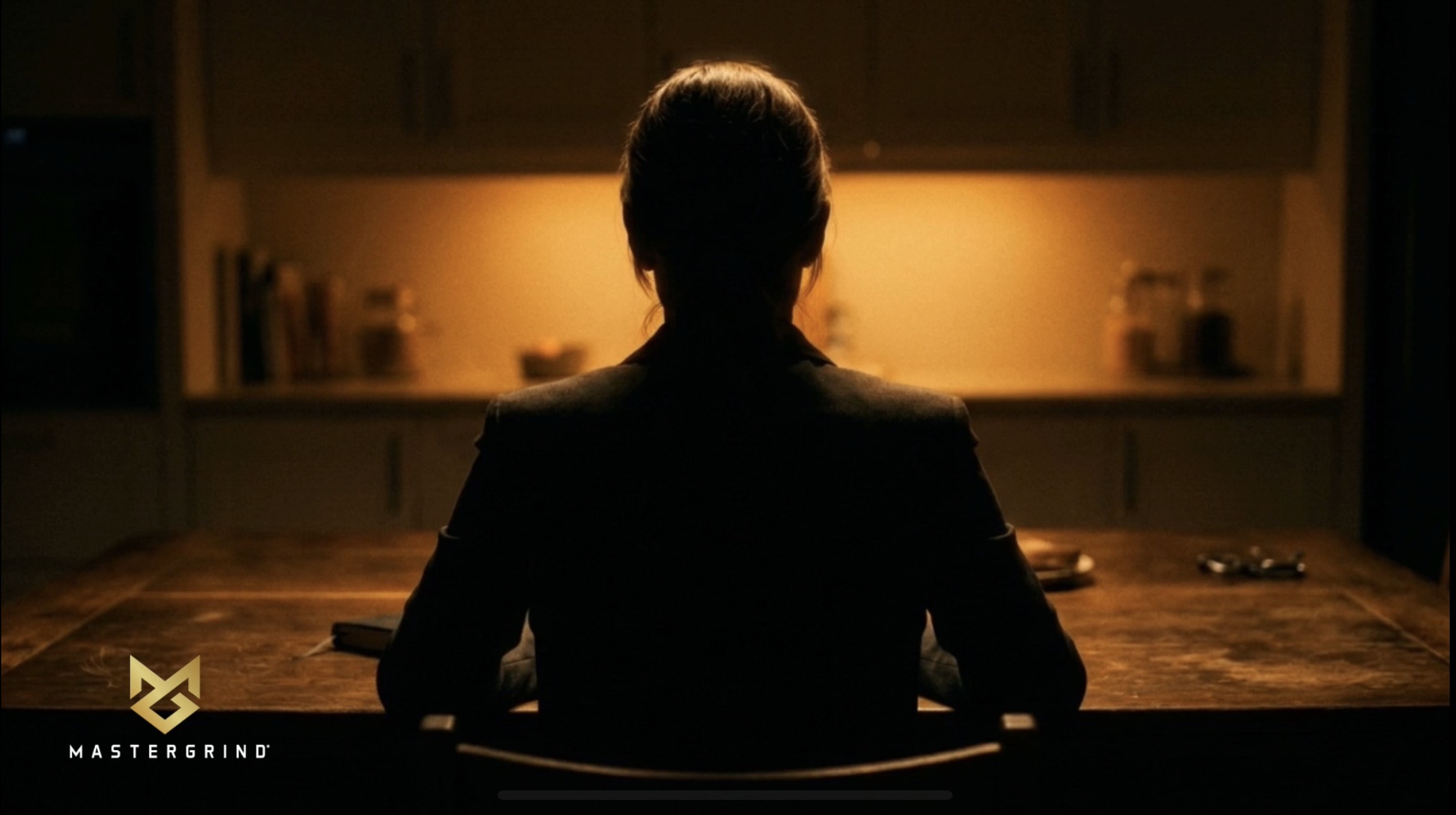
Activated Minds is a five-episode series built on a philosophy of activated greatness. Each episode follows one founder mind through one moment of pressure. This is Episode 01, Part 1. The series is the argument.
mastergrind.network/subscribe · Free on signup.
Get Activated. Stay Activated.
These Club benefits are available to you during your Trial Membership until the launch of Mastergrind Club.
These Club benefits are available to you during your Trial Membership until the launch of Mastergrind Club.
These Club benefits are available to you during your until the official launch of Mastergrind Club.
Limited Access to Mastergrind Network & Club Events. A curated set of past Club event recordings and select resources from the Club library.
Not the full Club. A real look inside it.






.png)


