




The Intentional Introduction
Episode 5/12: One Hundred and Forty-Six Words That Started a Two-Year Project
From
Alexander D. L. Oliver
The Founder Network Ledger
Download seven pages that help founders diagnose their position and practice the moves that activate their network.

Engage & Connect: Practice Arc, Episode 5
Everyone has sent this one. Two names in the subject line, a sentence saying they should know each other, a compliment for each, and then you disappear. It feels generous. It produces one polite reply and nothing else, because nobody said what happens next.
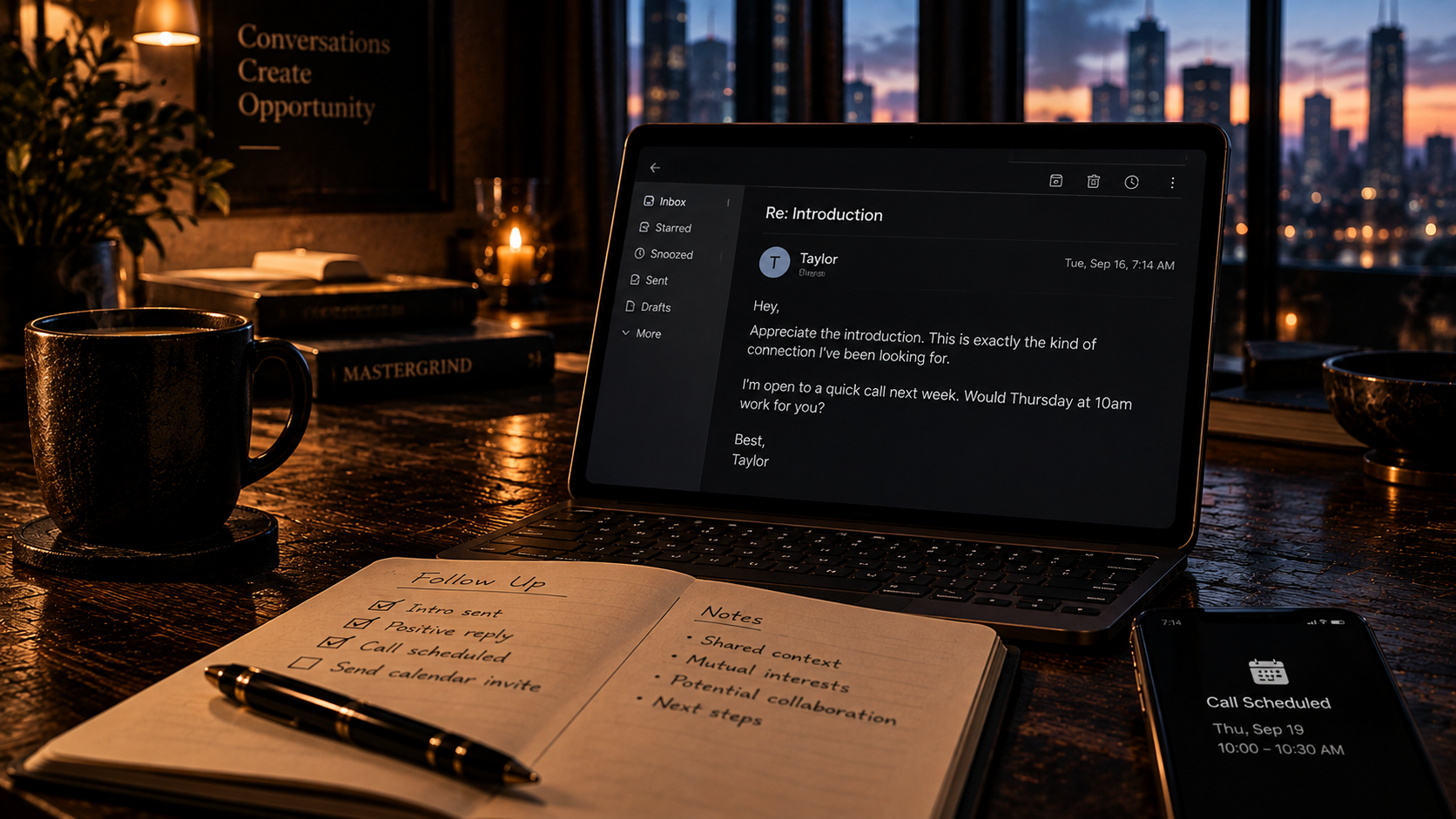
Here is one that worked. Sent on a Thursday, the week after a founders' dinner, to two people who had never met. One hundred and forty-six words, and page one of the Founder Network Ledger.

Subject: Marcus, meet Dana
Marcus, Dana.
Marcus runs a production studio that does founder documentaries, mostly for people at the stage where the story is real but nobody has captured it yet. Dana is opening her second location in March and told me last week that the first one's story has never been told properly, which is a problem when the second one needs to borrow its credibility.
I think there is a specific project here, not a general conversation. Dana, Marcus's last piece was for a restaurateur in almost exactly your position. Marcus, Dana's timeline is tight enough that the decision needs to happen this month.
Dana, can you send Marcus the dates you are on site next week? Marcus, if the fit is what I think it is, a thirty minute call before the end of next week would settle it.
I will leave you two to it.
Both replied within the hour. The call happened the following Tuesday. The project started in February.
THE SAME MESSAGE, SLOWED DOWN
"Marcus runs a production studio that does founder documentaries, mostly for people at the stage where the story is real but nobody has captured it yet."
He is not described as a filmmaker. He is described as someone who does one specific thing for people at one specific stage, and the stage is Dana's. Every word of his introduction is chosen through the lens of what she needs.
"Dana is opening her second location in March and told me last week that the first one's story has never been told properly"
Same move in reverse. Dana is not a restaurateur. She is a person with a problem, and it is Marcus's problem to solve. "Told me last week" does quiet work here: it says the introducer was listening, and it says the problem is Dana's own account of it, not the introducer's diagnosis.
"which is a problem when the second one needs to borrow its credibility."
This is the why, and it is the entire value of the message. Neither Marcus nor Dana could have made this observation about themselves. The introducer saw a fit between a problem one person named and a thing the other person does, and she said what she saw. Take this clause out and the message is two strangers and a compliment.
"I think there is a specific project here, not a general conversation."
Twelve words that tell both of them what kind of reply is expected. Not "let's grab coffee." A scoped thing with a decision at the end of it.
"Dana, can you send Marcus the dates you are on site next week? Marcus, if the fit is what I think it is, a thirty minute call before the end of next week would settle it."
Two next steps, one for each person, each with a deadline, and neither one requires the other person to move first. That last part is the detail most introductions miss. When both people are waiting for the other to act, the default is nothing.
"I will leave you two to it."
The introduction is no longer hers. She is not on the call. She will not be copied on the thread. Ownership has moved.
WHAT IT COST
About eight minutes to write. The observation behind it took a week: hearing Dana say the story had never been told, remembering what Marcus's last piece was, and noticing that the two facts belonged in the same message.

That is where the work is. Not in the writing. In the paying attention that makes the writing possible, and in being able to say what each of two people does in one sentence, which is the same skill as saying it about yourself.
The name for the move is the Intentional Introduction. Who, stated in terms of each other. Why, which is the fit only the introducer could see. What happens next, assigned to each person with a date. An introduction without a why is a suggestion. An introduction without a next step is a courtesy. Most introductions are one of the two, which is why most introductions produce nothing.
Make one this week. Write it out before you send it.
Download: The Founder Network Ledger
The strongest networks are built over time. Through trust. Through contribution. Through what happens after the introduction. The Founder Network Ledger gives you a way to see those relationships clearly and act on them deliberately.
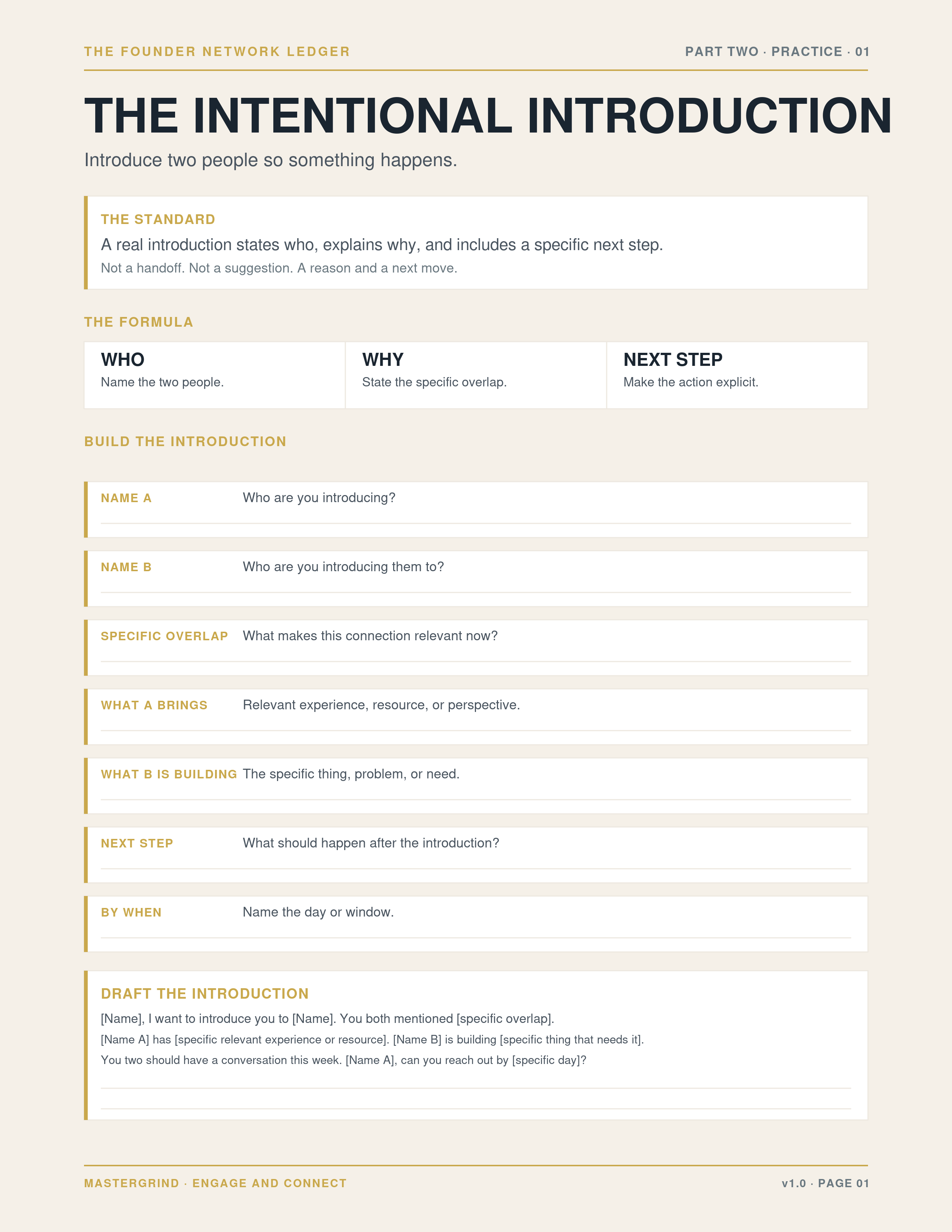
Seven pages. No noise. No performance. Nothing in it works until you write on it.
mastergrind.network/network-ledger
GET ACTIVATED. STAY ACTIVATED.
SOURCES REFERENCED IN THIS EPISODE
Judy Robinett, How to Be a Power Connector: The 5+50+100 Rule. McGraw-Hill, 2014.
Keith Ferrazzi with Tahl Raz, Never Eat Alone. Crown Business, 2005.
Adam Grant, Give and Take. Viking, 2013.
Robert Greene, Mastery. Penguin Books, 2012.
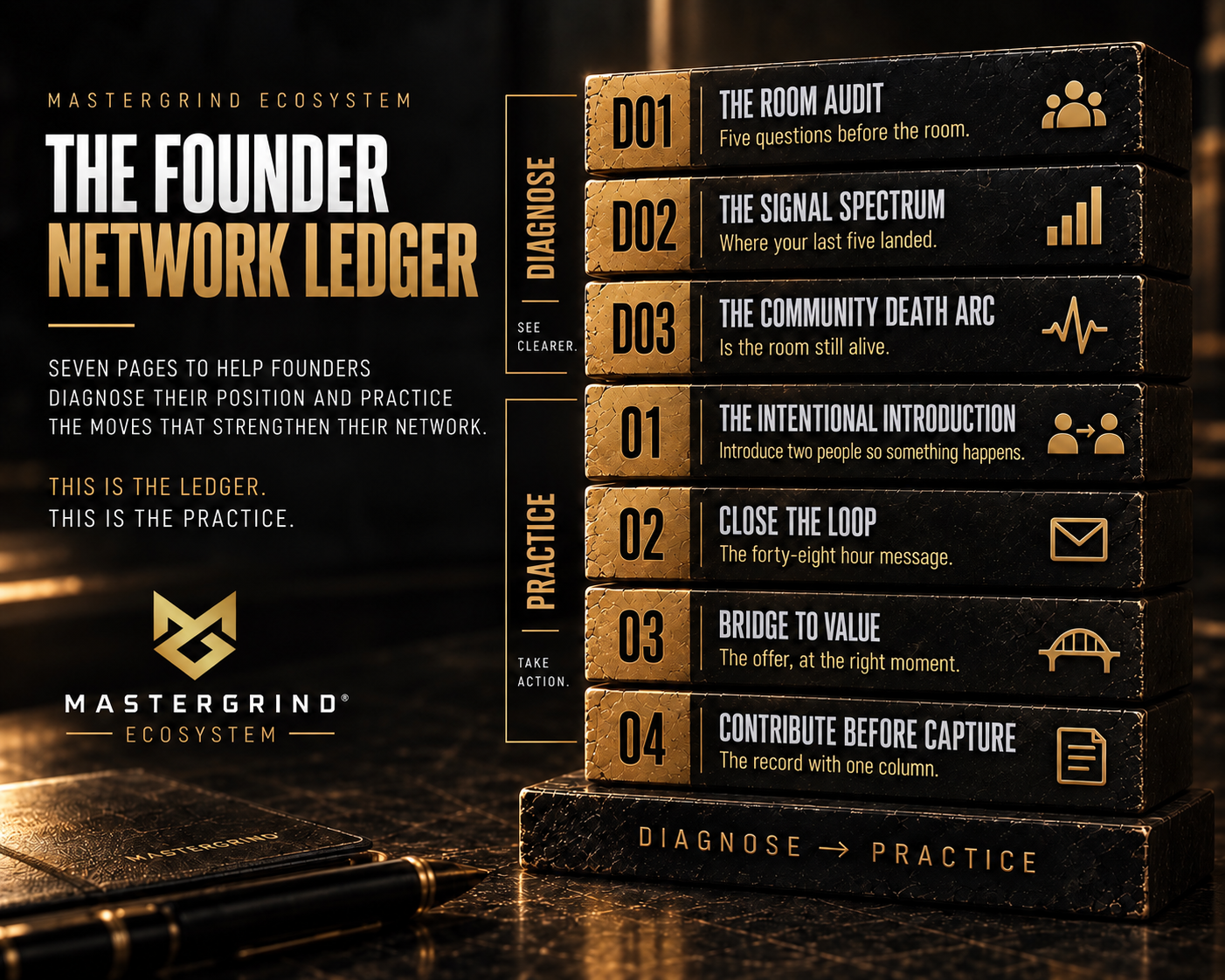
Download: Network Ledger
Download seven pages that help founders diagnose their position and practice the moves that activate their network.

Events:
Hosted by Mastergrind Club
Related:
Mastergrind Club


Spotlight:
The Founder Network Ledger
Stay close to what's being built!
Follow StreamsLocation:
New York City
Location Spotlight:
Shop at BKLYN Fitness
Marketplace:
Ecosystem Activation


Explore:
Mastergrind Network
Spotlight:
The Founder Network Ledger


Stay close to what's being built.
Follow Streams

Mindset: Fear of being average
Follow & Activate


Your Club-GOLD Membership
These Club benefits are available to you during your Trial Membership until the launch of Mastergrind Club.
Your Club-Silver Membership
These Club benefits are available to you during your Trial Membership until the launch of Mastergrind Club.
Your Club-Blue Membership
These Club benefits are available to you during your until the official launch of Mastergrind Club.
Your Limited Access Account
Limited Access to Mastergrind Network & Club Events. A curated set of past Club event recordings and select resources from the Club library.
Not the full Club. A real look inside it.


