




Close the Loop
Episode 6/12: Seventy-Seven Words, Written on a Train, Sent at 7:40
From
Alexander D. L. Oliver
The Founder Network Ledger
Download seven pages that help founders diagnose their position and practice the moves that activate their network.
Engage & Connect: Practice Arc, Episode 6
The conversation ended two hours ago and you are still carrying it.
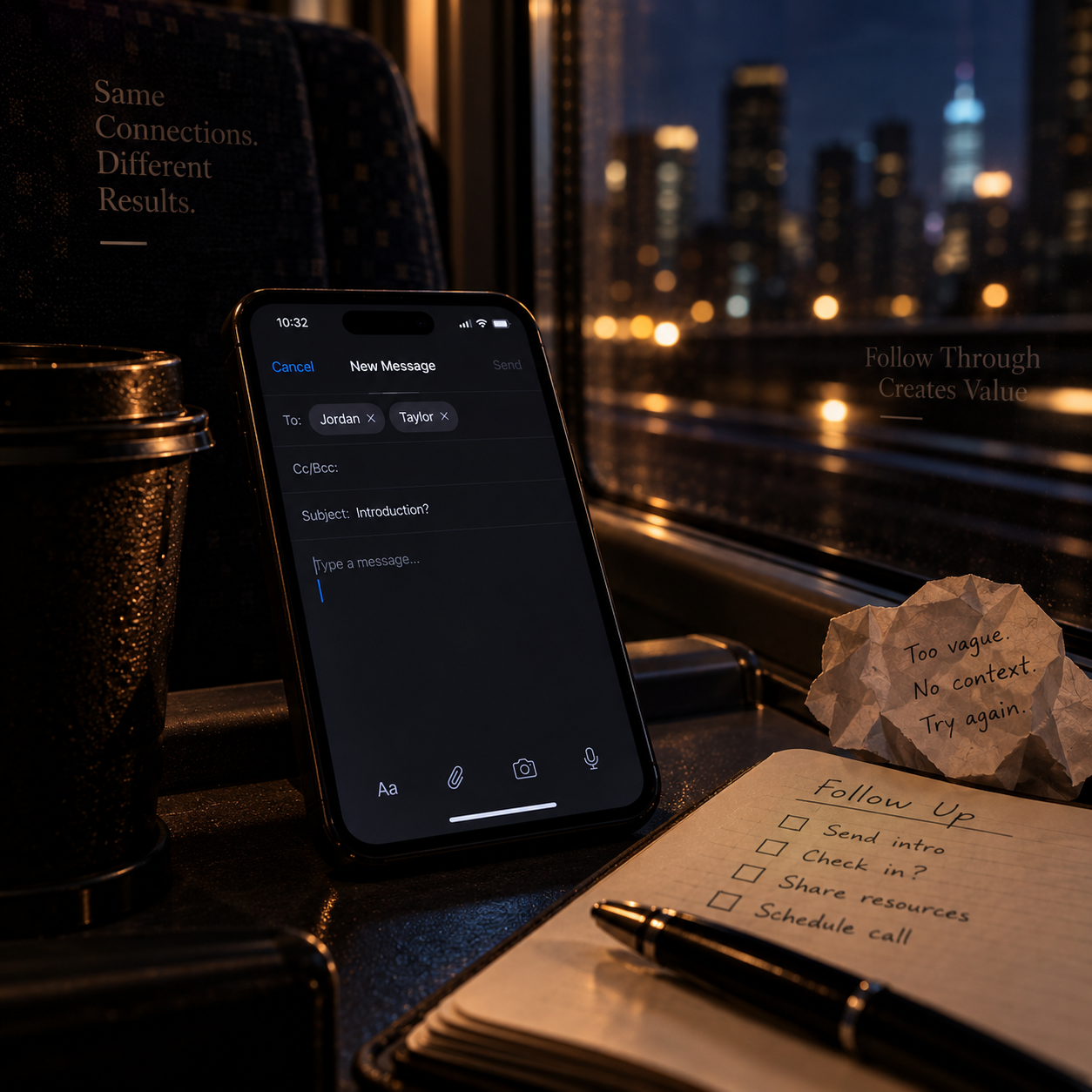
You remember the word she used. Stalled. You remember thinking you had something for that.
You still do. The thought is still accurate. The window is still open.
For now.
By Friday it will still be possible to send it. It will land differently. What would have read as attentiveness will read as an afterthought, and the relationship will be fine, and the moment will be gone.

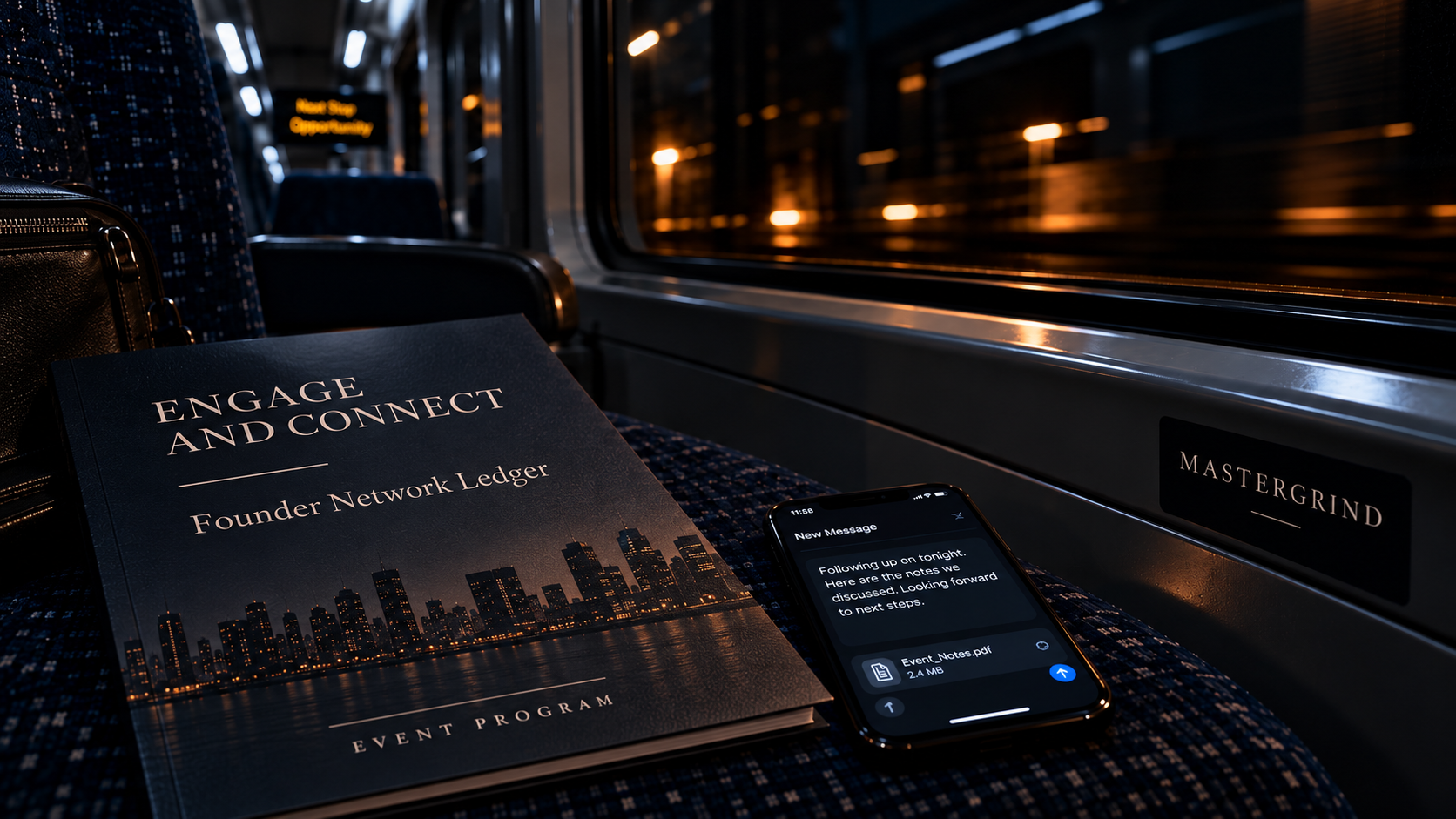
Here is one sent inside the window. Wednesday event, message written on the train at 11pm, sent Thursday at 7:40am. Seventy-seven words, and page two of the Founder Network Ledger.
Subject: the stalled thing
Priya,
You said stalled twice last night about the retention work. That is usually the word people use when they already know what is wrong and cannot get to it.
Attached is the audit we run for exactly that. Ninety minutes, and it will tell you whether the problem is onboarding or month four.
If it turns out to be month four, I know two people who have solved that specific thing. No rush either way.
Rob
THE SAME MESSAGE, SLOWED DOWN
"You said stalled twice last night about the retention work."
Not "great to meet you." Not "enjoyed our conversation." A word she used, counted, and placed. This is the sentence that proves he was there on Wednesday rather than merely present in the room, and it is the sentence most follow-ups replace with a pleasantry.
The specificity also does something harder to see. It tells her he was not running a process. Nobody logs the word someone repeated unless they were actually listening.
"That is usually the word people use when they already know what is wrong and cannot get to it."
One observation, offered without being asked. It is a small risk. He might be wrong, and if he is, the next line still works.
It is also the only interpretation in the message. He does not diagnose her business. He notices something about how she said it.
"Attached is the audit we run for exactly that. Ninety minutes, and it will tell you whether the problem is onboarding or month four."
The thing he said he would send is in this message. Not a promise to send it. Not a link to book a call where it will be discussed. Attached.
This is where most follow-ups quietly fail. The message goes out inside the window, and it says "I will get that over to you next week," which reopens the loop it was meant to close. If you cannot attach it yet, the message is not ready to send.
The ninety minutes is doing work too. It tells her what it costs before she opens it.
"If it turns out to be month four, I know two people who have solved that specific thing. No rush either way."
The door. One sentence, conditional, and nothing is owed. She can reply in ten seconds or not at all, and either way the relationship is unharmed.
A loop that closes stops. A loop that opens keeps running. The difference between the two is usually one conditional sentence at the end.
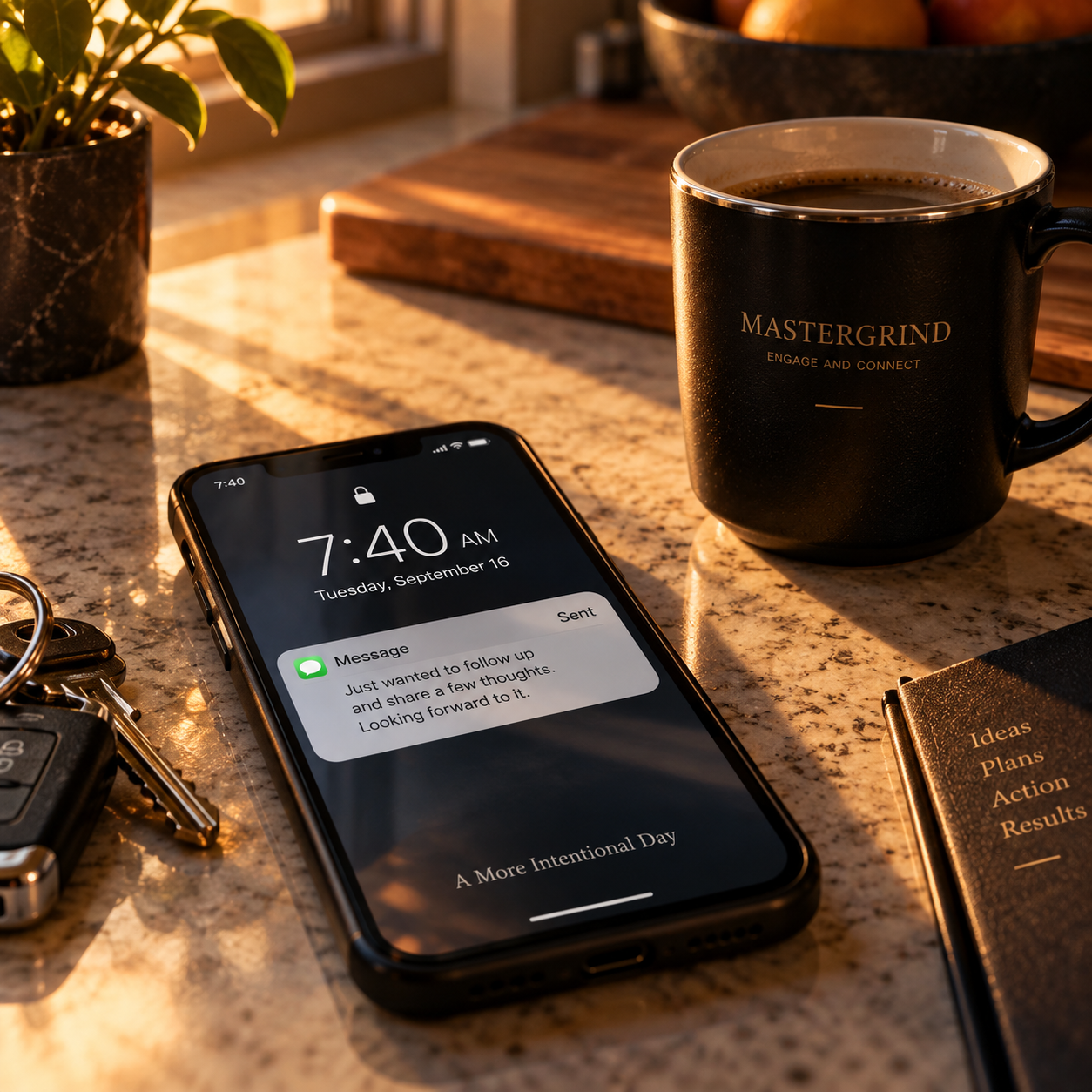
Seventy-seven words.
Short is not a stylistic choice here. A long follow-up says you wrote it because you had an hour, not because you had something. Everything in this message is either evidence he listened, the thing he owed her, or the door. There is no paragraph explaining how much he enjoyed the conversation.
WHAT MADE IT POSSIBLE
He did not remember to send this. He decided on the platform at 11pm which three of five conversations were worth following up on, wrote them on the train, and sent them in the morning when he was not tired.
That is the part that scales and the part nobody photographs. The founders who close every loop are not more thoughtful than the ones who do not. They removed the moment where remembering was required.
The name for the move is Close the Loop. Something exact they said. The thing you owed them, delivered now rather than promised. One door left open. Written Wednesday night, sent Thursday morning.
Forty-eight hours is not a rule. It is an observation about how conversation temperature works. Inside the window you are continuing something. Outside it you are starting over from a colder place.
Count the open loops in your network right now. Not vague ones. Specific people you told you would follow up with. Pick one. Close it today.
Download: The Founder Network Ledger
The strongest networks are built over time. Through trust. Through contribution. Through what happens after the introduction. The Founder Network Ledger gives you a way to see those relationships clearly and act on them deliberately.
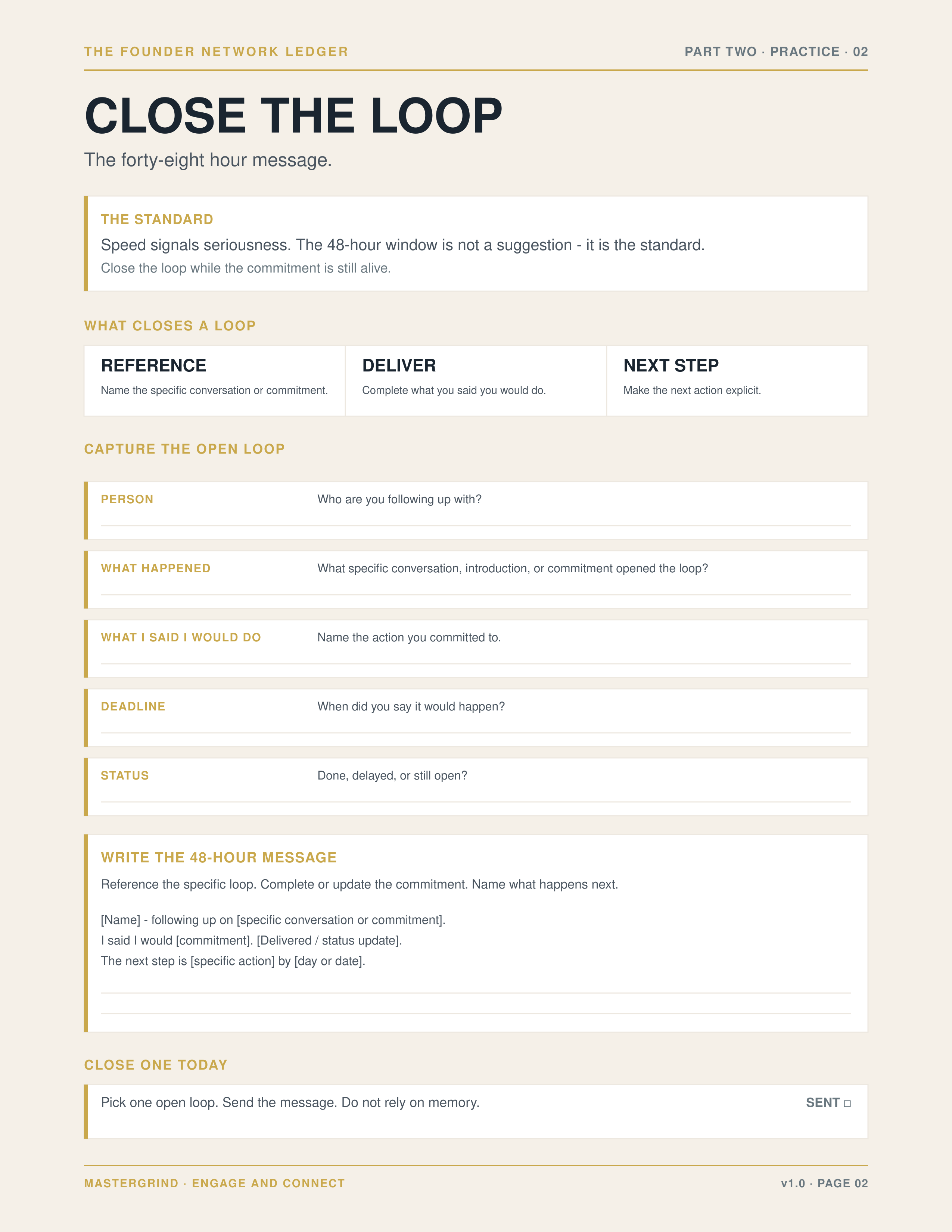
Seven pages. No noise. No performance. Nothing in it works until you write on it.
mastergrind.network/network-ledger
GET ACTIVATED. STAY ACTIVATED.
SOURCES REFERENCED IN THIS EPISODE
Keith Ferrazzi with Tahl Raz, Never Eat Alone. Crown Business, 2005.
Adam Grant, Give and Take. Viking, 2013.
Judy Robinett, How to Be a Power Connector: The 5+50+100 Rule. McGraw-Hill, 2014.
Malcolm Gladwell, Outliers: The Story of Success. Little, Brown, 2008.
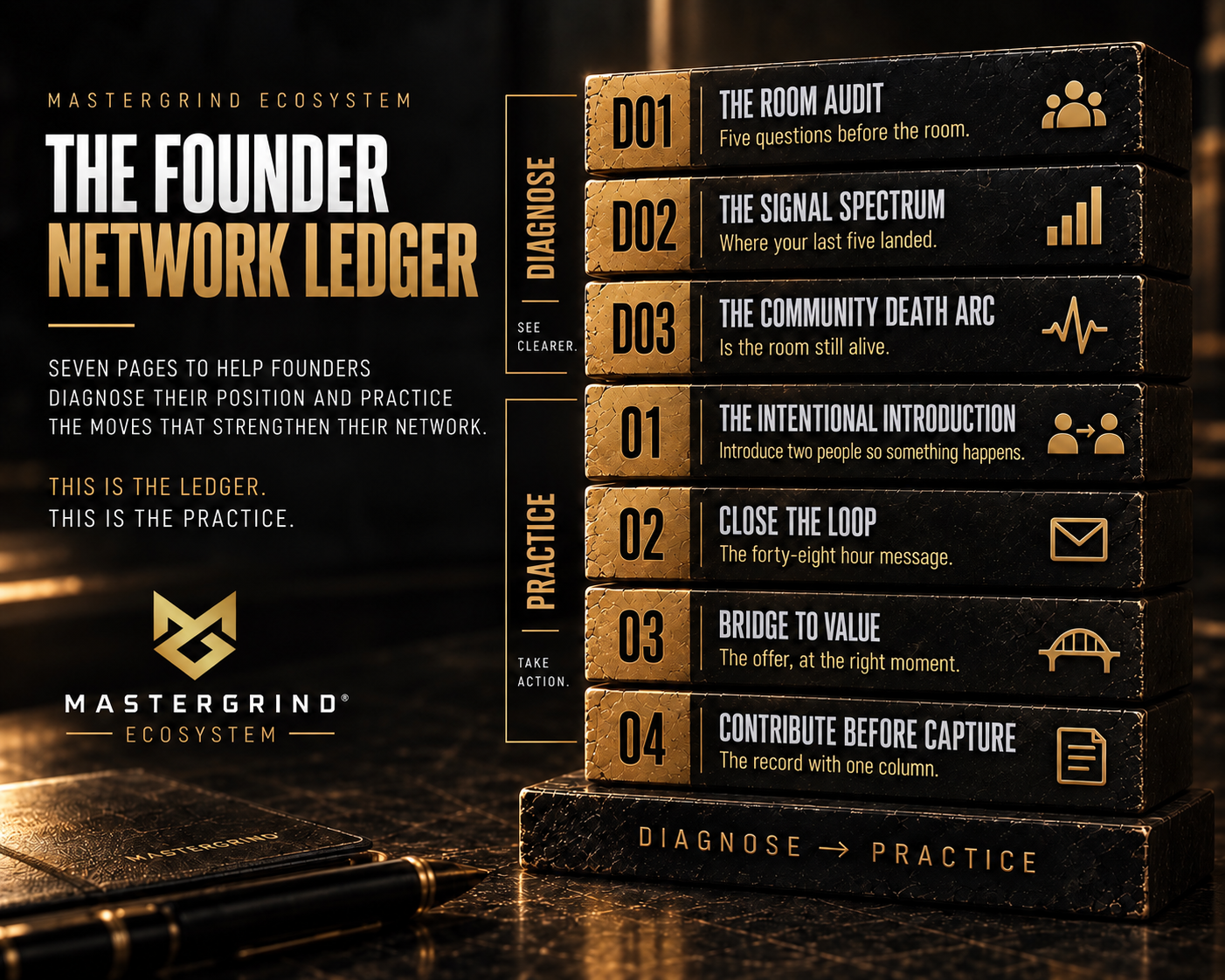
Download: Network Ledger
Download seven pages that help founders diagnose their position and practice the moves that activate their network.

Events:
Hosted by Mastergrind Club
Related:
Mastergrind Club


Spotlight:
The Founder Network Ledger
Stay close to what's being built!
Follow StreamsLocation:
New York City
Location Spotlight:
Download: Network Ledger
Marketplace:
Ecosystem Activation


Explore:
Mastergrind Network
Spotlight:
The Founder Network Ledger


Stay close to what's being built.
Follow Streams

Mindset: Fear of being average
Follow & Activate


Your Club-GOLD Membership
These Club benefits are available to you during your Trial Membership until the launch of Mastergrind Club.
Your Club-Silver Membership
These Club benefits are available to you during your Trial Membership until the launch of Mastergrind Club.
Your Club-Blue Membership
These Club benefits are available to you during your until the official launch of Mastergrind Club.
Your Limited Access Account
Limited Access to Mastergrind Network & Club Events. A curated set of past Club event recordings and select resources from the Club library.
Not the full Club. A real look inside it.


