




The Floor is Falling
Episode 1: That mechanism is operating right now. And it is operating on a new target.
From
Alexander D. L. Oliver
There is a question nobody is asking loudly enough.
Not whether AI will displace workers. That debate is settled, the payroll data from Stanford's August 2025 study of ADP records makes it empirical, not theoretical. Not whether the disruption is accelerating. The pace is documented. The question nobody is asking loudly enough is this:
Why is it always the same communities that absorb the first shock?
Not in this disruption. In every disruption. The answer is not incidental. It is structural. And if you do not understand the structure, you will spend the next decade waiting for a rescue that is not coming, while the people who understood it are already building somewhere else.
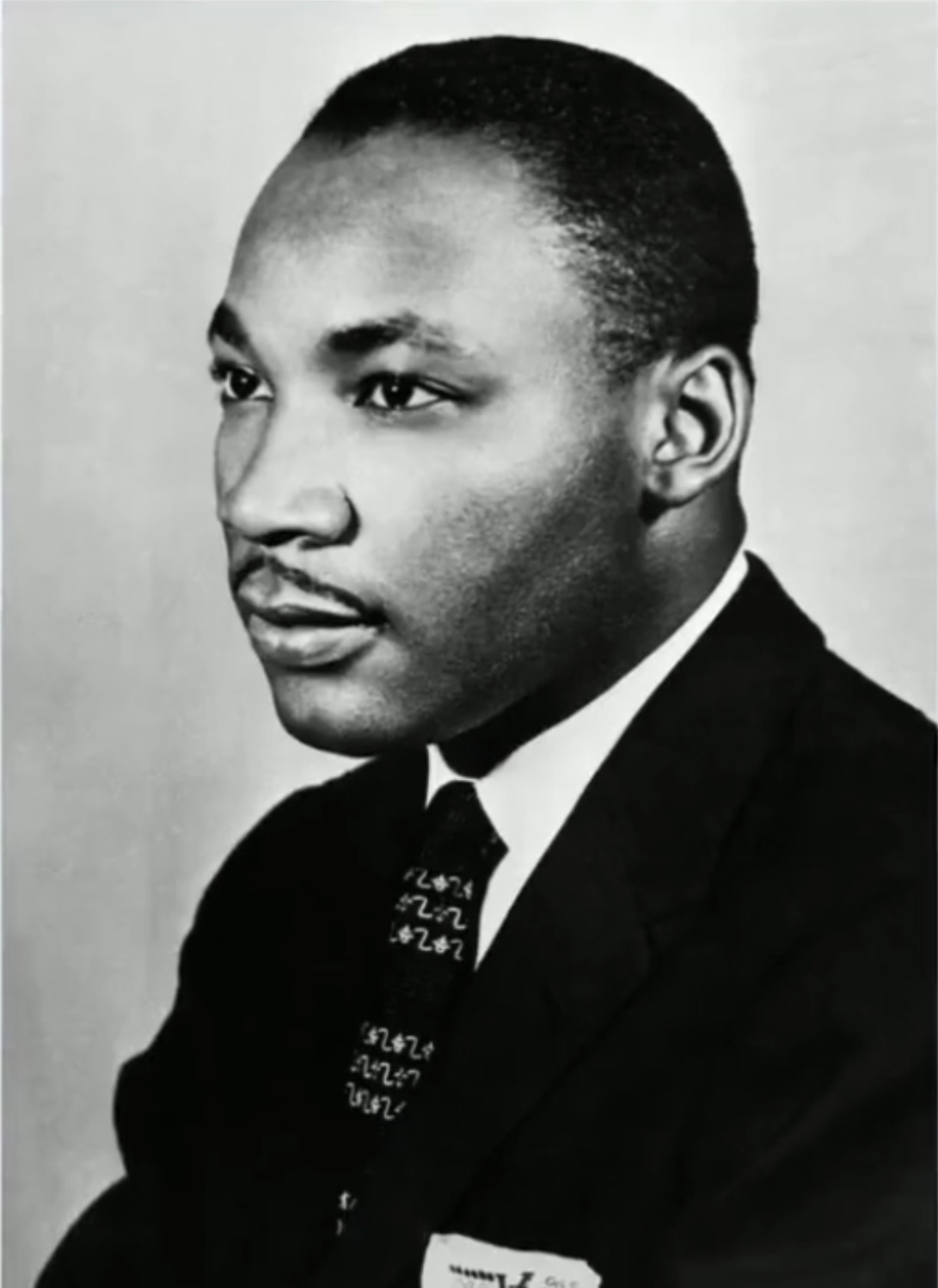
"Automation cannot be permitted to become a blind monster which grinds out more cars and simultaneously snuffs out the hopes and lives of the people by whom the industry was built.", Martin Luther King Jr., AFL-CIO Fourth Constitutional Convention, 1961
Source MLK Jr., Address to the AFL-CIO Fourth Constitutional Convention, Miami, December 11, 1961
What King Was Actually Talking About
December 1961. King was not speaking to a civil rights audience. He was speaking to the AFL-CIO, the largest labor federation in the United States, and he was talking about the automobile industry. About the assembly lines in Detroit, Flint, and Cleveland that had absorbed hundreds of thousands of Black workers who had migrated north from the South in the 1940s and 1950s. Workers who had built careers, bought homes, raised children, and established communities on the back of wages that were, for the first time in many of their families' histories, stable and growing.
Automation was beginning to remove those wages. Not slowly. At scale. And King understood, with a clarity that most of the labor movement did not yet share, that the workers who would absorb the first shock were not random. They were the workers who had arrived last. Who had the least institutional protection. Who had the fewest alternative paths. Who had, in every prior wave, been moved to the back of the line the moment conditions shifted.
He was describing a mechanism, not an incident. He was describing the repeating logic by which American economic transitions have always been managed: the people who built the previous system shoulder the cost of the next one.
That mechanism is operating right now. And it is operating on a new target.

The Credential Was the Ladder. Now It's the Trapdoor.
Stanford researchers Erik Brynjolfsson, Arun Chandar, and Siddharth Chen published their findings in August 2025, drawing on ADP payroll records for millions of American workers. The headline number was a 13% relative employment decline for workers aged 22 to 25 in the most AI-exposed occupations since late 2022. Software developers in that cohort were down nearly 20% from their peak. Workers in those same fields who were 30 and older saw employment grow by 6 to 12%.
Read that again. The people who just got in the door are being pushed back out. The people who already had the keys are fine.
This is not a coincidence of timing. It is the same mechanism King described, now running through a different industry. The cognitive labor economy was supposed to be the answer to the automation of physical labor. The degree, the certification, the decade of accumulated professional experience, these were the hedge. Legal research, financial analysis, marketing strategy, creative production, consulting, code. These were the roles that were supposed to be protected.
Brookings Institution research found that Black workers in the United States are roughly 40% more likely than white workers to be employed in jobs at high automation risk. Of the five occupations that employ the most Black and Latino workers, four are among the most AI-exposed. The workers who fought hardest to enter the professional economy, the first generation to carry a college degree, the immigrant who retrained, the woman who broke into a field that resisted her, are walking into a trapdoor built inside the room they were finally allowed to enter.
Source Stanford HAI, Canaries in the Coal Mine? (Brynjolfsson, Chandar, Chen, August 2025)
Source Brookings Institution, automation risk and racial disparities (Kristen Broady, 2024)
The Villain Is Not the Machine
This is the part of the conversation that gets misframed. The machine is not the villain. Technology has never been the villain in any automation story. The villain, if you want to use the word, is the mechanism that decides who absorbs the disruption cost and who captures the productivity gain. That mechanism has been consistent across two centuries of industrial transformation. It is not malicious in the way a person is malicious. It is structural in the way gravity is structural: it does not need to intend anything. It just operates.
In the 1810s and 1820s, the Luddite movement in England was not opposed to technology. It was opposed to the use of technology to dispossess skilled weavers of the economic position they had built over decades. The machines did not take the jobs. The owners of the machines did, by deploying them specifically to eliminate the leverage of organized skilled labor.
In the 1950s and 1960s, the automation of American manufacturing did not hit all workers equally. It hit Black workers, who had the least seniority protection and the fewest alternative employment paths, with a severity that contributed directly to the economic collapse of communities that had been stable for a generation.
Now it is running through the knowledge economy. The target is different. The mechanism is identical.
Goldman Sachs estimates 300 million full-time-equivalent jobs globally are exposed to AI disruption. McKinsey projects up to 30% of US work hours could be automated by 2030. The World Economic Forum's January 2025 report projects 92 million job displacements by 2030, concentrated in the clerical, administrative, and data-entry roles that represent the entry points into the professional economy. The Joint Center for Political and Economic Studies put a number to what that means structurally: median Black household wealth is $44,890. Median white household wealth exceeds $285,000. The cushion that determines whether a displacement period is survivable or catastrophic is not distributed equally. The people first in the path of the disruption have the least to land on.
Source Goldman Sachs, How Will AI Affect the US Labor Market? (2024)
Source WEF Future of Jobs Report 2025 (January 2025)
Source Joint Center for Political and Economic Studies, AI RFI submission (2025)
What This Is, And What It Demands
This is not a case for despair. King was not making a case for despair in 1961 either. He was making a case for clarity. For seeing the mechanism clearly enough to stop being surprised by it, and to build something that the mechanism cannot reach.
The floor is falling. That is empirically established. The communities that built the floor are absorbing the first impact. That is historically consistent. The question is not whether the pattern holds. The question is what you build that does not depend on the floor holding.
That is what the next two parts of this series are about. Part 02 examines who is already moving, and why the institutions that are supposed to respond cannot move at the speed required. Part 03 makes the structural case for what founders build now, while the window is open, before the consolidation closes around them.
The machine doesn't owe you a seat. But the seat you build yourself, before the floor drops, is the only one that is yours.
Download: The Founder's Infrastructure Map
The two-layer model. The six foundations. What to build, in what order, with what tools, and what good looks like when it is done.
Link: Download The Founder Infrastructure Map PDF

This is Part 01 of The Machine Doesn't Owe You a Seat, a three-part Mastergrind Originals series. Watch the video companion in the gallery, then download the AI Exposure Map at the link below. It maps the five layers you can own that AI cannot replicate and scores where you stand on each one right now.

Events:
Hosted by Mastergrind Club
Related:
Mastergrind Club


Spotlight:
Founder Infrastructure Map
Stay close to what's being built!
Follow StreamsLocation:
New York City
Location Spotlight:
Get Sex Ed Album
Marketplace:
Ecosystem Activation


Explore:
Mastergrind Network
Spotlight:
Founder Infrastructure Map


Stay close to what's being built.
Follow Streams

Mindset: Fear of being average
Follow & Activate


Your Club-GOLD Membership
These Club benefits are available to you during your Trial Membership until the launch of Mastergrind Club.
Your Club-Silver Membership
These Club benefits are available to you during your Trial Membership until the launch of Mastergrind Club.
Your Club-Blue Membership
These Club benefits are available to you during your until the official launch of Mastergrind Club.
Your Limited Access Account
Limited Access to Mastergrind Network & Club Events. A curated set of past Club event recordings and select resources from the Club library.
Not the full Club. A real look inside it.


