

our mission
Mastergrind Club exists to rebuild the system that was never built for founders; a curated ecosystem where exceptional builders are the center, not the bottom, and where relationships, recognition, and opportunity compound in their favor.

05 — Broadcast Session
Consistent authority content — podcast, livestream, or recorded interview.
Production Tier: Tier A–B
Event Category: Mastergrind Amplified
Amplification: High Potential
Primary Signal: Authority + Media Asset
Secondary Signals: Opportunity, Trust (for recurring audience)
What This Format Is
The Broadcast Session is the ecosystem's primary content engine. Unlike event formats that require physical presence, the Broadcast Session reaches the entire network and beyond — every episode is a public signal. The power of this format is cumulative: one strong episode builds credibility. Twelve consistent episodes builds authority. Consistency is the strategy.
Amplification Eligibility
Status: High Potential
Format is designed for amplification. Standard criteria apply. The guest or topic must be genuinely compelling — not just available. Cadence consistency matters as much as individual episode quality.
Who This Format Is Built For
Coaches and Consultants
A recurring podcast or interview series is the highest-leverage consistent content format for coaches and consultants. It positions them as the person who convenes important conversations — and their questions reveal their expertise as much as any answer they give.
Example: A leadership coach launches a bi-weekly interview series: 'What Actually Works.' She interviews one founder per episode about a real leadership challenge they faced and what they did. The series becomes known for its honesty. She attracts clients who found her through the podcast before they ever attended an event.
Realtors and Property Experts
A realtor who produces a consistent market intelligence broadcast — real data, real analysis, real perspective on what is happening in a specific market — becomes the go-to source for anyone thinking about that market. This is a differentiation play that separates them from every other agent with a newsletter.
Example: A luxury realtor records a monthly 'State of the Market' — 15 minutes, camera and screen share, real data, honest assessment. No sales pitch. After 8 months, she is the most-referenced market voice in her network. Three clients arrived specifically because they had been watching for months before they were ready to transact.
Operators and Creative Founders
Operators can use the Broadcast Session to make their work visible — project breakdowns, behind-the-scenes of how they work, conversations about craft and process. This format gives depth to operators who are often seen but not known.
Example: An agency owner runs a monthly 'How We Built It' — a breakdown of one project, one challenge, one lesson. No client names, no promotional framing. Just the honest story of the work. The series attracts exactly the type of clients who want a partner who thinks that way.
Run of Show
Phase
Duration
What Happens
Pre-Session Prep
15–20 min
Host and guest connect before recording. Host shares the format, 2–3 topic areas, and one key question they want the guest to have thought about. Guest is warmed up, not scripted.
Recording — Opening
3–5 min
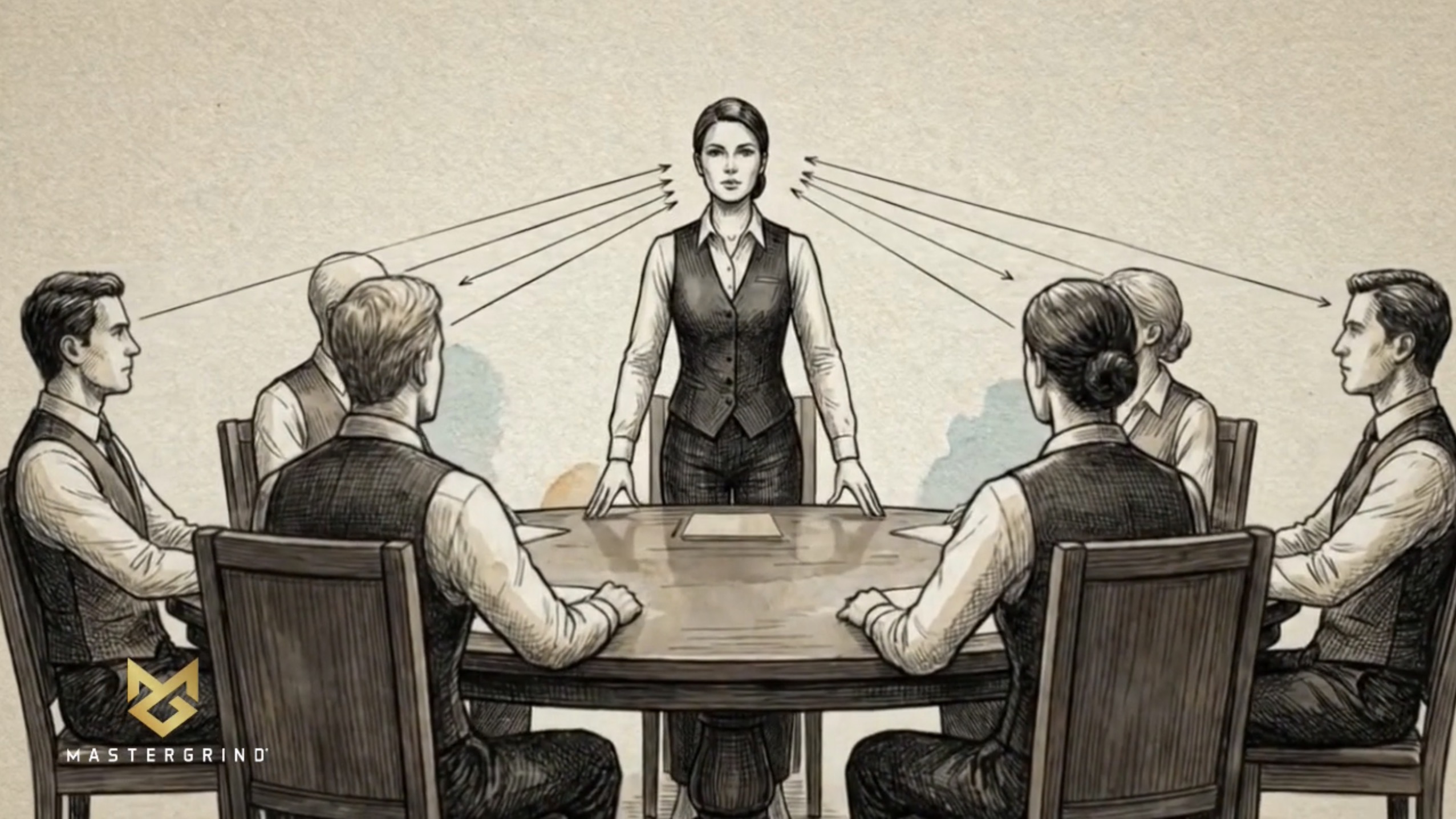
Host opens with a sharp framing statement, not a lengthy introduction. Guest introduction is one sentence. The conversation starts immediately.
Recording — Core Conversation
25–40 min
Structured but conversational. Host guides with prepared questions but follows the best threads wherever they lead. The best moments are rarely on the question list.
Recording — Close
3–5 min
Host closes with the same question every episode — this becomes the show's signature. Example: 'What is the one thing you know now that you wish you had known earlier?'
Post-Recording
10–15 min
Host and guest continue the conversation off-record. This is often where the most useful insight comes out — and it gives the host material for future questions.
Environment

These Club benefits are available to you during your Trial Membership until the launch of Mastergrind Club.
These Club benefits are available to you during your Trial Membership until the launch of Mastergrind Club.
These Club benefits are available to you during your until the official launch of Mastergrind Club.
Limited Access to Mastergrind Network & Club Events. A curated set of past Club event recordings and select resources from the Club library.
Not the full Club. A real look inside it.






.png)


