

our mission
Mastergrind Club exists to rebuild the system that was never built for founders; a curated ecosystem where exceptional builders are the center, not the bottom, and where relationships, recognition, and opportunity compound in their favor.

02 — Open Mastermind
High-trust conversation that generates real deals and collaborations.
Production Tier: Tier A
Event Category: Community Engagement
Amplification: Not Eligible (default)
Primary Signal: Trust
Secondary Signals: Opportunity, Collaboration
What This Format Is
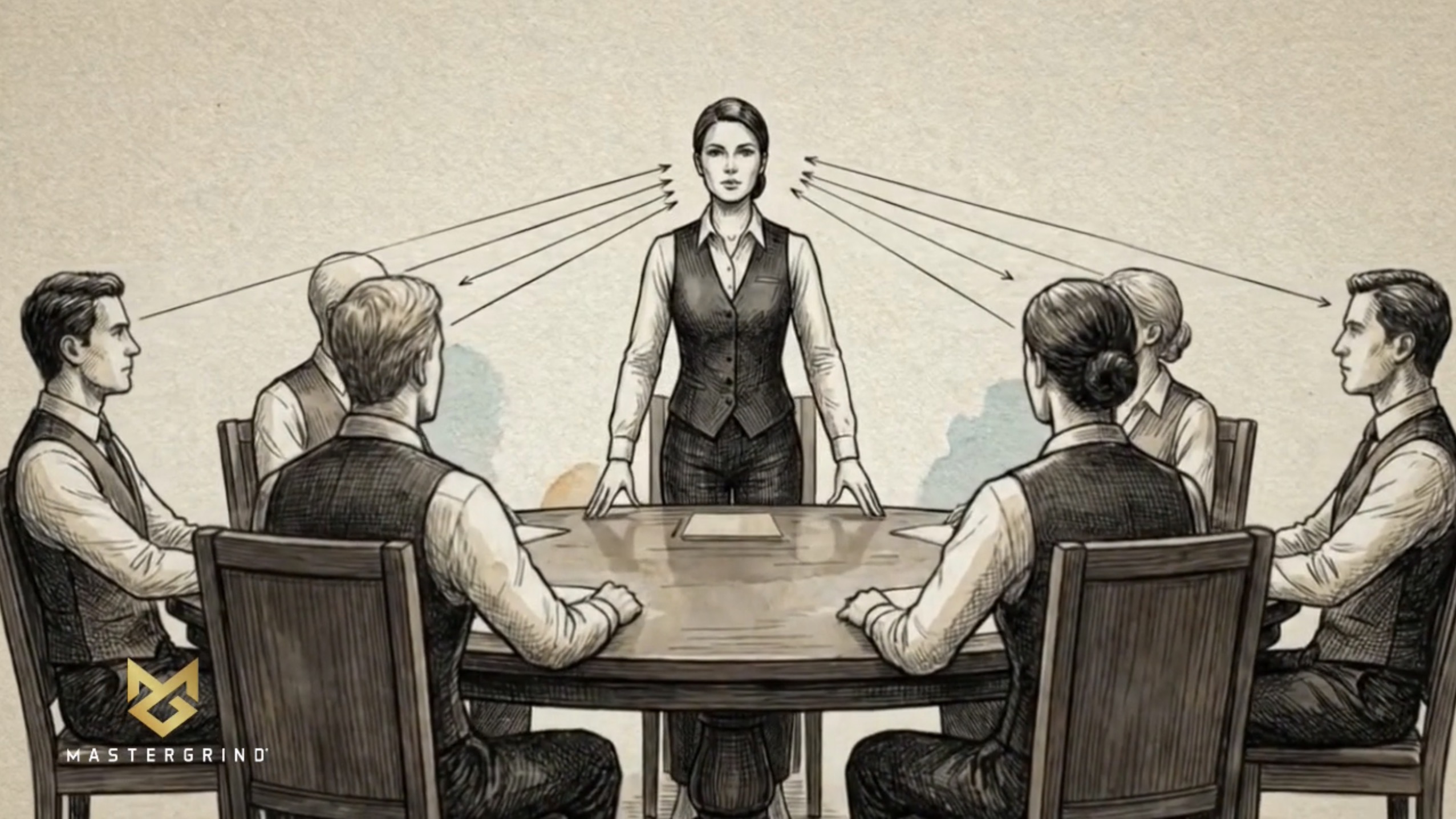
The Open Mastermind is where real business gets done. It is not a roundtable discussion event. It is not a panel. It is a small, curated, high-trust environment where founders speak honestly about what they are building, what they need, and what they can offer. The format is deceptively simple — but the curation is everything. The wrong person in the room changes the entire dynamic.
Amplification Eligibility
Status: Not Eligible (default)
Not designed for amplification. The value is in the privacy of the room. If extraordinary content emerges and all participants consent, a discreet written recap — not video — may be considered.
Who This Format Is Built For
Realtors and Property Professionals
Realtors generate significant deal flow from relationships. An Open Mastermind positions them as a connector and relationship hub — not just a transaction professional. When they are known as the person who introduces the right people, their sphere of influence expands beyond property.
Example: A luxury realtor hosts a dinner Mastermind with 8 founders. She facilitates the round-robin. By the end, two deals have been discussed, one intro has been made, and she has identified a potential off-market buyer for a listing. None of this was the stated agenda.
Coaches and Consultants
Coaches and consultants benefit from being seen as operators who understand real business problems — not just mindset or methodology. An Open Mastermind puts them in the room where real problems are shared, which positions them as someone who understands the landscape, not just the theory.
Example: A business coach facilitates a dinner Mastermind for 6 founders. She does not pitch. She listens, asks sharp questions, and makes two observations that shift the room. Three members approach her after. Two become clients.
Operators and Agency Owners
Operators often struggle to communicate what they do in rooms that are not yet familiar with their work. The Open Mastermind gives them a format where their capability shows up naturally — through how they engage with others' problems, not through a presentation of their own.
Example: An agency owner joins a Mastermind as a participant. He does not host. He listens carefully and offers one specific, useful suggestion to a founder struggling with client delivery. The founder follows up the next day to explore working together.
DJs and Creative Founders
Creative founders often feel out of place in traditional business conversations. The Open Mastermind format levels that — everyone is sharing a real problem, not competing on business credentials. It also gives creative founders access to business relationships they would not typically encounter.
Example: A DJ and events creative joins a Mastermind dinner. He shares a challenge around monetizing his creative work beyond performance fees. Two founders immediately offer connections and ideas. One becomes an ongoing business partner for branded events.
Run of Show
Phase
Duration
What Happens
Arrival and Settling
10–15 min
Guests arrive to a set table, ambient music, drinks available. No name badges. Host greets each person personally. No group introductions yet — let the room settle naturally.
Host Framing
3–5 min
Host opens with a brief framing: what this room is, what it is not, and the one operating principle — contribution over consumption. Everyone gives before they ask.
Round-Robin: What I Am Building
20–30 min
Each person shares: what they are currently building, what stage they are at, what they are focused on right now. 2–3 minutes per person. Facilitator keeps time gently.
Round-Robin: What I Need
15–20 min
Each person names one specific thing they are looking for — a connection, a resource, a perspective, a skill. Specificity is encouraged. Vague asks get vague responses.
Open Floor
20–30 min
Facilitator opens the floor for direct connections, offers, and conversations. This is where deals start, introductions get made, and collaborations begin. Facilitator watches, connects, and quietly prompts where needed.
Close
5 min
Host closes with one sentence: what they are taking away from the room tonight. Optional for others to share.
Environment

These Club benefits are available to you during your Trial Membership until the launch of Mastergrind Club.
These Club benefits are available to you during your Trial Membership until the launch of Mastergrind Club.
These Club benefits are available to you during your until the official launch of Mastergrind Club.
Limited Access to Mastergrind Network & Club Events. A curated set of past Club event recordings and select resources from the Club library.
Not the full Club. A real look inside it.






.png)


