

our mission
Mastergrind Club exists to rebuild the system that was never built for founders; a curated ecosystem where exceptional builders are the center, not the bottom, and where relationships, recognition, and opportunity compound in their favor.

03 — Current Talk
A curated panel or discussion on a topic that matters right now.
Production Tier: Tier A or B
Event Category: Mastergrind Amplified (if qualifies)
Amplification: Conditional
Primary Signal: Authority
Secondary Signals: Media Asset, Opportunity, Culture
What This Format Is
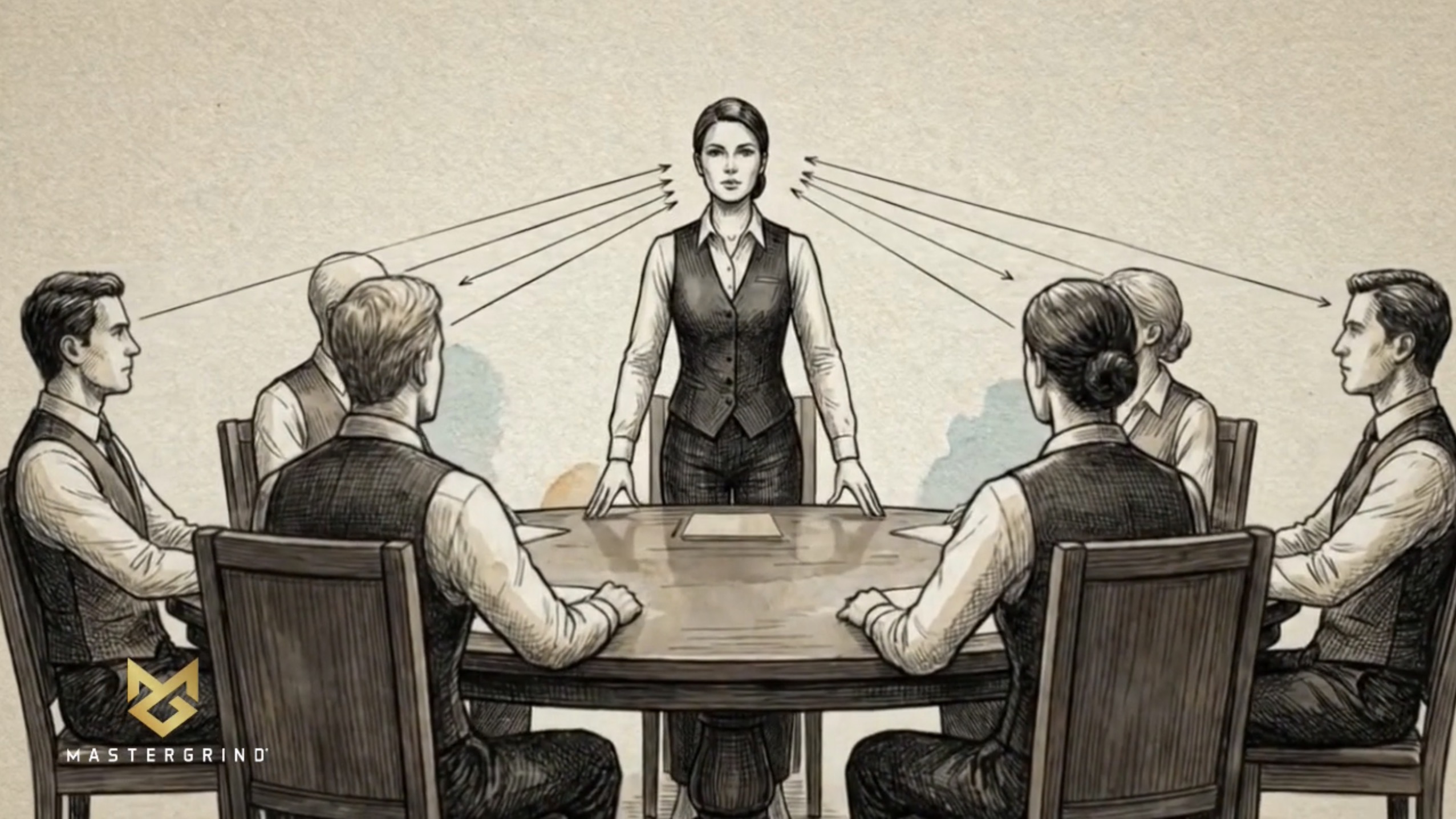
The Current Talk is the ecosystem's primary authority-building discussion format. It positions Mastergrind and its members at the intersection of ideas that matter. Done well, it is a salon — intimate, intelligent, specific. Done poorly, it is a panel that sounds like every other panel. The difference is curation: of the topic, the speakers, and the room.
Amplification Eligibility
Status: Conditional
Must meet all four qualification criteria. Strong panel curation is critical — one weak panelist undermines the whole event. The topic must be genuinely current and the perspectives must be genuinely distinctive.
Who This Format Is Built For
Coaches and Consultants
This is the natural format for consultants and coaches who have a strong perspective on a current trend or challenge. The Current Talk positions them as someone who shapes the conversation — not just someone who has a methodology.
Example: An executive coach convenes a Current Talk on 'Why High-Performers Are Burning Out Faster Than Ever.' She moderates. Three founders share their experience. She offers the framework. The conversation is filmed. The clips reach 4,000 people in the ecosystem and beyond. Three inbound coaching inquiries arrive within a week.
Realtors and Property Professionals
A realtor who can convene a credible conversation about the current state of a specific market — commercial, luxury residential, short-term rental — positions themselves as a market intelligence source, not just a transaction professional. The topic must be specific and the panel must be credible.
Example: A commercial realtor hosts a Current Talk: 'The Future of Retail Space in [City] — Is the Correction Over?' She invites a developer, a retail brand founder, and an urban planning consultant. The conversation is sharp and specific. She is positioned as the person who convenes these conversations — which is a different level of authority than someone who sells properties.
Operators and Agency Owners
Agency owners and operators can use this format to position themselves on the future of their industry — AI's impact on creative work, the changing landscape of performance marketing, the agency model under pressure. These conversations attract clients who are trying to understand the same questions.
Example: A creative agency owner hosts a Current Talk: 'What Does AI Actually Do to Creative Work?' Three guests — a brand strategist, an AI tool founder, and a skeptical creative director. The conversation is honest, not promotional. The agency owner is positioned as someone who can hold complexity — which is what good clients want in an agency partner.
Run of Show
Phase
Duration
What Happens
Pre-event Setup
30 min before
Room is set. Moderator briefs each panelist individually on the flow, the topic framing, and the one or two questions they will be asked specifically. No surprises.
Doors and Networking
20–30 min
Guests arrive to a room with light music and a clear focal point — the panel setup. Drinks available. Creator begins capturing arrivals and energy.
Moderator Opens
3–5 min
Moderator frames the topic with one sharp observation or provocation. No lengthy introductions of panelists — one sentence each, maximum.
Panel Discussion
35–45 min
Moderated conversation. 3–4 questions. Moderator draws out disagreement and specificity. Avoids surface agreement. Best moments come from tension between perspectives.
Audience Questions
10–15 min
Moderator fields questions from the room. Filters weak questions. Amplifies strong ones.
Close and Networking
20–30 min
Moderator closes with one line. Informal networking follows. Creator captures post-panel conversations and panelist moments.
Environment

These Club benefits are available to you during your Trial Membership until the launch of Mastergrind Club.
These Club benefits are available to you during your Trial Membership until the launch of Mastergrind Club.
These Club benefits are available to you during your until the official launch of Mastergrind Club.
Limited Access to Mastergrind Network & Club Events. A curated set of past Club event recordings and select resources from the Club library.
Not the full Club. A real look inside it.






.png)


